
This is general guidance. The operating manual supplied with each FMT mixer, and the manuals of the motor, gearbox and seal makers, take priority for your unit.
1. Before the mixer arrives
- Nozzle. Fit the nozzle at the size, flange rating, elevation and orientation shown on our GA drawing. Nozzle reinforcement is designed and fitted by the tank contractor to the tank's design code.
- Clearances inside the tank. Check the impeller's path is clear of heating coils, swing lines, roof legs and other internals at every liquid and roof level.
- Access and lifting. Plan how the mixer will be lifted into place, and leave room around it for later seal and bearing work.
- Power. Run the cable and fit the starter to suit the motor rating and, where it applies, the hazardous-area classification of the site.
2. Mounting
- Lift the mixer by its lifting points, never by the shaft, impeller or motor fan cover.
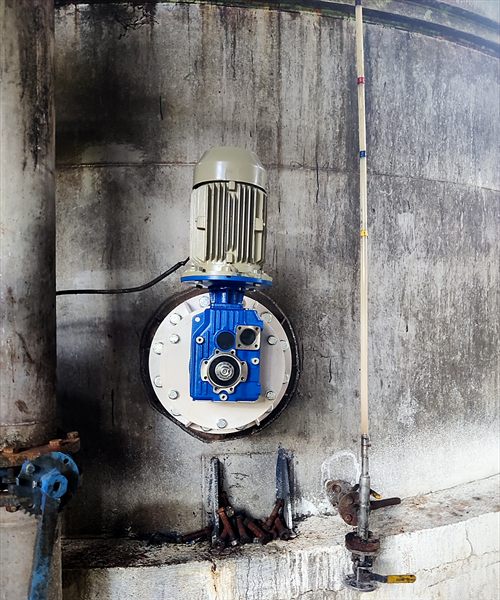
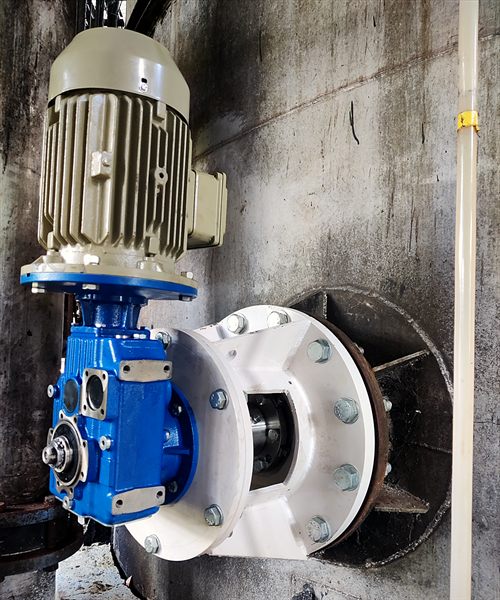
- Fit a new gasket, pass the impeller through the nozzle, and bolt the mounting flange up evenly in a cross pattern.
- Fit any supports shown on the drawing.
- Turn the shaft by hand. It should turn freely, with no contact between the impeller and the nozzle.
3. Before the first start
- Check the gearbox oil level and grade against the gearbox manual.
- Check that the bearings are greased.
- On belt drives, check the belt tension and pulley alignment.
- On double seals, fill and pressurise the barrier fluid system as the seal maker specifies.
- Make sure the shut-off device is fully open.
- Fill the tank until the impeller is covered by at least the minimum running level.
- Jog the motor and check the direction of rotation. In the wrong direction the jet pushes back towards the wall and the mixer does little.
- Refit every guard before running.
4. First run checks
Run the mixer and check, over the first few hours:
- Motor current, compared with the nameplate
- Noise and vibration from the motor, gearbox and bearing housing
- Temperature of the gearbox and bearing housing, which should settle and stay steady
- The seal, which should show no visible leakage
5. Routine maintenance
| How often | What to check |
|---|---|
| Daily walk-round | Unusual noise or vibration, oil or product leaks, seal leakage, guards in place |
| Weekly | Belt condition on belt drives; barrier fluid level on double seals |
| Monthly | Flange and mounting bolts; motor current against the first-run value |
| As per the manuals | Bearing greasing, gearbox oil change, belt replacement |
| At planned shutdowns | Impeller condition and fastening, especially in abrasive or corrosive service |
6. Changing the mechanical seal
The seal is the part that needs the most attention on any side entry mixer, because it works below the liquid level. On FMT mixers the seal comes with a shut-off device. With the mixer stopped and isolated, the shut-off device is closed to block the shaft opening from inside the tank, and the seal can then be removed and replaced with the tank full. Always confirm the shut-off is holding before opening the seal, and follow the operating manual step by step.
7. Spares to keep on site
- Mechanical seal or seal kit
- Bearings and oil seals for the bearing housing
- V-belts for belt-driven units
- Flange gasket
- Gearbox oil and bearing grease of the grades given in the manuals
8. Common faults
| What you see | Likely causes |
|---|---|
| Seal leaking | Worn seal faces, mixer run with too little liquid over the impeller, barrier fluid lost on a double seal, or excessive shaft movement from worn bearings |
| Vibration | Liquid level too low, a damaged or fouled impeller, worn bearings, or loose mounting bolts |
| Motor current high | Product thicker than designed (often a cold start), a fouled impeller, or over-tight belts |
| Gearbox noisy or hot | Low or old oil, or worn gearbox bearings |
| Belts squealing or slipping | Loose or worn belts, or misaligned pulleys |
For spares or help with an FMT side entry mixer, contact us with the details from the mixer's nameplate.
Common questions
Can the seal of a side entry mixer be changed without draining the tank?
On FMT side entry mixers, yes. The seal comes with a shut-off device that closes the shaft opening from inside, so the seal can be removed while the tank is full. Follow the procedure in the operating manual and confirm the shut-off is holding before opening the seal.
Can a side entry mixer run with the tank empty?
No. The impeller must be covered by enough liquid before the mixer is started, and the mixer stopped before the level falls too close to it. Running with too little liquid over the impeller loads the shaft and bearings and can damage the seal. We state the minimum running level in the offer.
How often does a side entry mixer need maintenance?
Routine checks are short and done from the ground. Oil changes, bearing greasing and belt checks follow the intervals in the gearbox, bearing and belt makers' manuals, adjusted for running hours and site conditions.
Which spares should we keep?
At least one mechanical seal or seal kit and a set of bearings for each mixer type on site, plus V-belts for belt-driven units and a flange gasket. We list recommended spares with every offer.